

Andropause Weight Gain Treatment in Rochester, NY: What Actually Causes It
You gained weight around the middle. Your energy dropped. Your drive faded. So you searched online, found the word andropause, and landed on a clinic offering testosterone shots.Andropause Weight Gain Treatment | Rochester NY
Here is what most of those clinics leave out. For men carrying extra weight, low levels are usually a result of the weight gain, not the cause. That single fact flips the treatment plan.
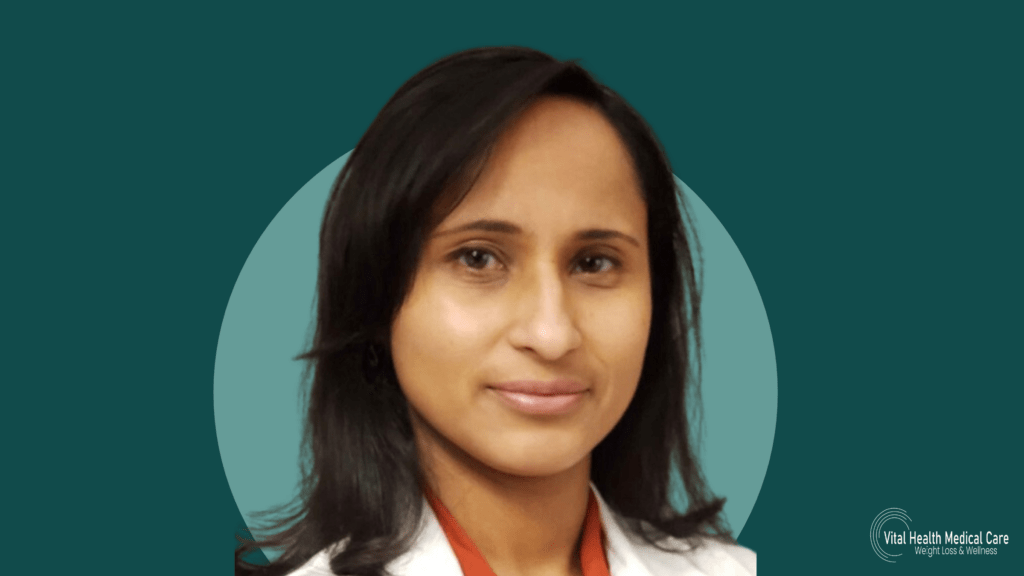
Dr. Sanin Syed, MD leads Vital Health Medical Care in Pittsford. She holds board certification in two fields. One is obesity medicine. The other is internal medicine. She also teaches as an Assistant Professor of Medicine at the University of Rochester Medical Center. Her approach starts with one question. Which problem came first? The answer changes everything that follows.
The Short Answer
Andropause is not a real diagnosis in the way menopause is. Women stop producing estrogen over a defined window. Men do not have an equivalent event. Levels drop slowly with age, and many men stay in the normal range for life.
Meanwhile, body fat lowers it directly. Fat tissue holds an enzyme called aromatase. It turns testosterone into estradiol. More fat means more of that switch. The extra estradiol then tells the brain to make less.
So a loop forms. Weight gain lowers your levels. Low levels then make weight harder to shed. Doctors even have a name for it. They call it male obesity-associated secondary hypogonadism.
The useful part is that the loop runs both ways. Research shows that losing weight raises testosterone. So the right andropause weight gain treatment in Rochester NY often starts with the weight, not the shot.
Why Men Gain Weight in Midlife
Testosterone Falls Slowly, Not Suddenly
Male levels drop slowly from around age 30. The drop is slow and varies widely between men. Many men in their fifties and sixties still test normal.
That matters because symptoms overlap with many other conditions. Fatigue, belly weight, low mood, and poor focus all have long lists of possible causes.
The European Male Aging Study asked which symptoms truly tracked with low levels. Only sex-related symptoms showed a clear link. Poor morning erections, low libido, and erectile problems clustered with total testosterone under about 320 ng/dL. Fatigue and weight gain alone did not.
Fat Lowers Testosterone
This is the mechanism most TRT ads skip. Aromatase in fat tissue turns testosterone into estradiol. The more fat you carry, the more of it switches over.
Rising estradiol then presses on the brain-to-testicle signal. Your body releases less LH and FSH, so your testicles make less testosterone.
Other weight-linked problems pile on. Swelling in the body lowers it. Insulin resistance lowers it. Sleep apnea does too, partly through broken sleep and low oxygen at night.
Reported rates of low levels among men with obesity swing widely across studies. One review cites a range of about 29% to 79%, based on the group and the cutoff used. So read those figures as a rough estimate.
Everything Else That Deserves a Look
Several other causes hide behind the same symptoms. Sleep apnea tops the list, and it often goes undiagnosed for years. Thyroid disease can mimic all of it. So can depression, heavy alcohol use, and poor sleep from any source.
Medicines matter as well. Certain antidepressants, beta blockers, opioids, and steroids all shift weight or hormones. Bring your full list to your appointment, because that review often solves the puzzle in five minutes.
What Weight Loss Does to Your Testosterone
A 2024 review in Cureus pooled the evidence on weight loss and male hormones. It found strong support for a simple pattern. When men lose fat, testosterone tends to rise.
The review tied that rise to three changes. Insulin works better. Body-wide swelling drops. And aromatase slows down. Diet, exercise, and weight loss surgery all showed the effect, though results differ by person.
Strength training helps here twice over. It builds muscle and cuts fat. Research also links it to better hormone levels in men.
So you have a real choice. You can add the hormone from outside. Or you can remove the thing damping your own supply. For many men carrying extra weight, the second route treats the cause.
What Testosterone Therapy Does and Does Not Do
TRT is a legitimate treatment. Some men clearly need it. But the marketing around it oversells one thing in particular.
It Reshapes Your Body More Than It Shrinks It
The evidence here is consistent. The drug raises lean mass and lowers fat mass in men who truly run low. Endocrine Society guidance notes gains in fat-free mass and muscle strength. It also notes drops in whole-body and belly fat.
But total weight is a different question. One review of randomized trials in men with low levels found that the drug raised lean mass. Yet it found no clear change in BMI or fat mass across the five trials that measured them.
So expect a composition change more than a scale change. That is still worth having. Just do not expect the number to drop the way ads imply.
It Works Best Alongside Weight Loss, Not Instead of It
One randomized trial makes this point well. Researchers gave 100 men with obesity and low levels a very low energy diet. They then assigned the hormone or a placebo for 56 weeks.
Both groups lost similar lean mass during the diet phase. But the treated group regained about 3.3 kg of lean mass afterward. The placebo group did not. The authors concluded that weight loss with the hormone came almost entirely from fat.
Read that carefully. The diet did the weight loss. Testosterone protected the muscle. That is a supporting role, and a valuable one.
What the FDA Label Actually Says
This detail matters, and almost no TRT clinic mentions it. The large TRAVERSE trial enrolled 5,246 men. It reported that the drug did not raise major heart events versus placebo. Rates ran about 7.0% against 7.3%.
In February 2025, the FDA responded with class-wide label changes. It added the TRAVERSE results to all testosterone products. It removed the boxed warning about heart risk. And it kept the “Limitation of Use” wording for age-related low levels.
Notice that last point. The FDA approves the drug for men with a known medical cause of low levels. Aging alone still sits outside that use. Endocrine Society guidance also advises against routine treatment for all men 65 and older with low levels.
The Fertility Risk Few Clinics Explain
If you might want children, read this before you start. The hormone from outside shuts down your own production signal. Sperm counts fall as a result.
The American Urological Association, or AUA, is blunt about it. Its guideline says outside testosterone stops normal sperm production. It can drive counts very low or to zero. And men trying to conceive should not take it.
Recovery usually happens, but slowly and unevenly. In contraceptive studies, about two-thirds of men recovered sperm within six months of stopping. Roughly 10% took until the second year.
Other options exist for men who want higher levels and still want kids. Ask about those before you agree to shots.
What a Real Evaluation Looks Like
Testing Done Properly
Testing has rules, and rushed clinics often skip them. Draw the sample in the morning, when levels peak. Then confirm a low result with a second morning draw, because levels swing day to day.
A single afternoon finger-stick is not a diagnosis. If your result comes back low, the next question is why. That means checking LH and FSH to see whether the signal problem sits in your brain or your testicles.
The Rest of the Panel
A sensible workup usually covers thyroid function, HbA1c, fasting glucose, a lipid panel, a complete blood count, a metabolic panel, and vitamin D. Sleep apnea screening belongs here too if you snore or wake unrefreshed.
Prolactin and iron studies sometimes matter as well, since a pituitary problem or iron overload can lower levels. Which tests apply to you depends on your history, so use this as a starting point for the conversation rather than an order sheet.
Body Composition, Not Just Weight
A scale reports one number and hides the two that matter. Vital Health Medical Care measures fat mass, lean muscle mass, visceral fat, hydration, and resting metabolic rate.
For men, visceral fat deserves special attention. That is the deep belly fat around your organs. It drives the aromatase problem, and it carries the strongest links to heart disease and type 2 diabetes.
Repeat scans then show whether your plan is working. Losing fat while holding muscle is the goal. The scale alone cannot tell you which one is moving.
Treatment That Addresses the Cause
Strength Training Comes First
Resistance training does several jobs at once for men. It builds muscle, which burns more energy at rest. It cuts deep belly fat. And research ties it to better hormone levels.
The American College of Sports Medicine advises at least two strength sessions weekly. Pair that with 150 to 300 minutes of moderate cardio.
Vital Health Medical Care sits across from the Jefferson and Clover Road YMCA in Pittsford. Nearby you also have Genesee Valley Park, the Erie Canal towpath, and the Lehigh Valley Trail.
Fix Your Sleep
Sleep apnea deserves its own paragraph, because it sits at the center of this loop. It lowers your levels. It drives weight gain. And it wrecks the daytime energy men blame on hormones.
If you snore, wake up tired, or someone has told you that you stop breathing at night, raise it early. A sleep study often unlocks the whole picture.
Nutrition Built for Muscle
Protein protects muscle while you lose fat. Many groups suggest roughly 1.2 to 1.6 grams per kilogram of body weight daily for adults losing weight. Your right target depends on kidney function and activity, so confirm it with your doctor.
Alcohol deserves an honest look too. It adds calories. It breaks up sleep. And at higher intakes it lowers your levels.
Dietitians build the meal plans here. Dr. Syed also trained in lifestyle medicine, diet counseling, plant-based medicine, and culinary medicine. So cooking classes back up the plan.
FDA-Approved Weight Loss Medication Where It Fits
For men who qualify, modern obesity drugs work well. Two naming points first, since marketing blurs them constantly.
Wegovy holds FDA approval for long-term weight management. Ozempic contains the same drug, semaglutide, but the FDA approved it for type 2 diabetes, so weight use is off-label. Zepbound holds approval for weight management and, since 2024, for moderate to severe sleep apnea in adults with obesity.
On results, the STEP trials showed average loss near 12% to 15% of body weight over about 68 weeks with semaglutide. The SURMOUNT trials averaged above 20% at higher tirzepatide doses over roughly 72 weeks. Those are supervised trial averages, and your own result may differ a lot.
One caution applies here as well. Rapid loss without protein and strength work costs you muscle. So body composition tracking belongs alongside the prescription, not after it.
Why Rochester Men Choose Vital Health Medical Care
Weight is a regional health issue across upstate New York. State Department of Health survey data put adult obesity near 29.1% statewide, and state analyses place the Finger Lakes among the higher regions. Those numbers rest on self-reported height and weight, so read them as a trend.
Most local options for men fall into one of two camps. Hormone clinics sell testosterone. General programs sell diets. Neither one asks which problem came first. Real andropause weight gain treatment in Rochester NY has to answer that question before it prescribes anything.
Vital Health Medical Care opened in 2022 at 10 Office Parkway, Suite 100 in Pittsford. Patients travel from Brighton, Penfield, Fairport, Webster, Victor, and downtown Rochester.
WXXI’s Connections with Evan Dawson has featured Dr. Syed’s work in obesity medicine. The Rochester Academy of Medicine also invited her to speak. She teaches residents and medical students at URMC, where the internal medicine residents gave her their Best Teacher Award. That URMC link helps when your care needs urology or endocrinology input.
Two practical notes. You do not need a referral to book. And the team checks your insurance benefits before you start.
Frequently Asked Questions
Is andropause a real medical condition?
Not in the way menopause is. Menopause marks a defined end to ovarian hormone production. Men have no such event.
Levels do fall slowly with age, starting around 30. But the drop varies widely, and many men never fall below normal. Real deficiency exists and deserves care. The catch is that it needs a proper workup, not a symptom checklist.
Does low testosterone cause belly fat, or does belly fat cause low testosterone?
Mostly the second, and that surprises many men. Fat tissue holds aromatase, which turns testosterone into estradiol. Higher estradiol then damps the brain signal that tells your testicles to work.
Doctors call the result male obesity-associated secondary hypogonadism. The loop does run both ways. But for a man carrying extra weight, fat usually drives the hormone rather than the reverse.
Will testosterone therapy make me lose weight?
It changes your shape more reliably than your weight. Research shows the drug raises lean mass and lowers fat mass in men who truly run low.
However, one review of randomized trials found no clear change in BMI or fat mass across the five trials that measured them, even though lean mass rose. So expect a shape change rather than a big scale drop.
Should I get testosterone or lose weight first?
For most men with extra weight, address the weight first or work on both together. Weight loss lifts your own levels, as a 2024 Cureus review concluded.
There is also a reasonable middle path. One randomized trial of 100 men with obesity and low levels paired a diet with the hormone. The diet produced the weight loss, and testosterone helped protect lean mass during it. That combination needs a doctor who monitors both.
Is testosterone therapy safe for my heart?
The evidence improved recently. The TRAVERSE trial enrolled 5,246 men and found testosterone was not inferior to placebo for major cardiac events, at about 7.0% versus 7.3%.
Acting on that, the FDA made class-wide label changes in February 2025. It removed the boxed warning about heart risk. It also kept the “Limitation of Use” wording for age-related low levels. So the safety picture improved. But the approved use did not expand to normal aging.
Can testosterone therapy affect my fertility?
Yes, and the effect is large. The AUA guideline says outside testosterone stops normal sperm production. It can drive counts very low or to zero. So men trying to conceive should not take it.
Recovery is usually possible but slow. In contraceptive studies, roughly two-thirds of men recovered sperm within six months of stopping, while about 10% needed until the second year. If children are on your mind, raise it before your first injection and ask about alternatives.
What tests should I ask for?
Start with a morning total testosterone. Repeat it on a second morning if the first comes back low. Add LH and FSH to find where the problem sits.
Then cover the rest: thyroid function, HbA1c, fasting glucose, a lipid panel, a complete blood count, a metabolic panel, and vitamin D. Add sleep apnea screening if your sleep is poor. Which tests truly apply depends on your history, so discuss the list with your doctor.
How long before I see results?
It depends on the cause. Treating sleep apnea can lift daytime energy within days to weeks. Strength gains from training often show up in four to six weeks.
Hormone changes come in stages. Sex-related symptoms usually improve before your shape does. GLP-1 trials measured their main results at 68 to 72 weeks. Anyone who promises a fixed timeline before testing you is guessing.
The Bottom Line
Your symptoms are real. But the label attached to them online is doing you a disservice, and it shapes the andropause weight gain treatment Rochester NY clinics tend to sell.
For most men carrying extra weight, low testosterone is a downstream effect rather than the root problem. Fat tissue turns testosterone into estradiol, and that switch damps your own production. So the useful question is not where to buy the hormone. It is what drives the loop, and what breaks it.
Sometimes the answer includes the hormone, prescribed after real testing. Often it includes sleep apnea care, strength training, protein, and weight loss that lifts your own levels. Frequently it includes both.
Dr. Sanin Syed brings over 20 years of practice and a URMC faculty role. She holds board certification in obesity medicine and in internal medicine. Her program joins medical review, body scans, dietitian support, cooking classes, exercise plans, and coaching in one place.
Meet Dr. Sanin Syed – Leading Medical Weight Loss Specialist in Rochester, NY
Dr. Sanin Syed, founder and CEO of Vital Health Medical Care, is a board-certified obesity and internal medicine specialist. With over two decades of experience, Dr. Syed is dedicated to helping her patients achieve lasting weight loss and a healthier lifestyle.
- Recognized Expertise: Dr. Syed’s knowledge has been featured on NPR’s Evan Dawson Show and in the Rochester Academy of Medicine.
- Commitment to Patient Health: She focuses on building sustainable health habits and lifestyle changes that support long-term success.
Our clinic, located at 10 Office Parkway, Suite 100, Pittsford, NY, provides a welcoming and professional setting for patients who are ready to make positive changes.
Why Choose Vital Health Medical Care?
Experienced Weight Loss Doctor
Dr. Sanin Syed is one of the leading weight loss doctors in New York, with over 20 years of experience in medicine and obesity management. She holds dual board certifications from the American Board of Obesity Medicine and the American Board of Internal Medicine, ensuring you receive the highest standard of care.
Personalized Care
At Vital Health Medical Care, we believe in a personalized approach to weight loss. Our programs are tailored to meet your unique needs, ensuring you receive the best possible care and support on your weight loss journey.
Comprehensive Support
We provide ongoing support throughout your weight loss journey, including regular monitoring and adjustments to your plan as needed. Our comprehensive approach ensures you have the resources and guidance necessary to achieve your weight loss goals.
Insurance Acceptance
We understand that managing healthcare costs is important. That’s why we accept a wide range of insurance plans to make our weight loss treatments accessible and affordable for everyone.
Nutritional Counseling
Our qualified nutritionists create personalized diet plans that fit your lifestyle and dietary preferences. We provide expert guidance on making healthy food choices that support your weight loss goals.
Physician Consultation
Our experienced physicians, led by Dr. Syed, will work with you to find the best medication and treatment plan for your needs. We utilize FDA-approved medications such as Wegovy and Zepbound to support your weight loss efforts.
Health Coaching
Our health coaches provide ongoing support and motivation, helping you stay on track with your weight loss goals. They offer practical advice and encouragement to help you overcome challenges and achieve lasting success.
Culinary Medicine
Learn how to prepare healthy, delicious meals that support your weight loss journey with guidance from our culinary medicine experts. We offer cooking classes and workshops to help you develop the skills needed to maintain a healthy diet.
Meal Replacement
We offer meal replacement options that are nutritious and convenient, helping you manage your calorie intake effectively. Our meal replacements are designed to support your weight loss goals while ensuring you receive essential nutrients.
Individualized Exercise Plan
Our fitness experts develop personalized exercise plans tailored to your fitness level and goals. We provide guidance on the best types of exercise for weight loss and overall health, ensuring you achieve optimal results.
Comprehensive Weight Loss Treatment in Rochester, New York
Vital Health Medical Care offers evidence-based weight loss treatments designed to help you succeed. We take a holistic approach, integrating medication, diet, exercise, and behavioral changes to ensure long-term success. Contact us today to schedule a consultation and start your journey.