

Hashimoto’s Weight Loss Specialist Near Rochester: Why Autoimmune Thyroid Disease Changes the Entire Weight Loss Equation
You have the diagnosis. Your thyroid peroxidase antibodies came back elevated, your TSH is now sitting comfortably inside the reference range on levothyroxine, and your physician told you everything looks good. Meanwhile you are still exhausted by two in the afternoon, your rings are tight some mornings and loose on others, and the eating plan that worked for your sister has done nothing for you in four months. If that describes your experience, the problem is not your discipline. It is that Hashimoto’s thyroiditis is an autoimmune disease that happens to affect the thyroid, and treating only the hormone output leaves the rest of the picture untouched.
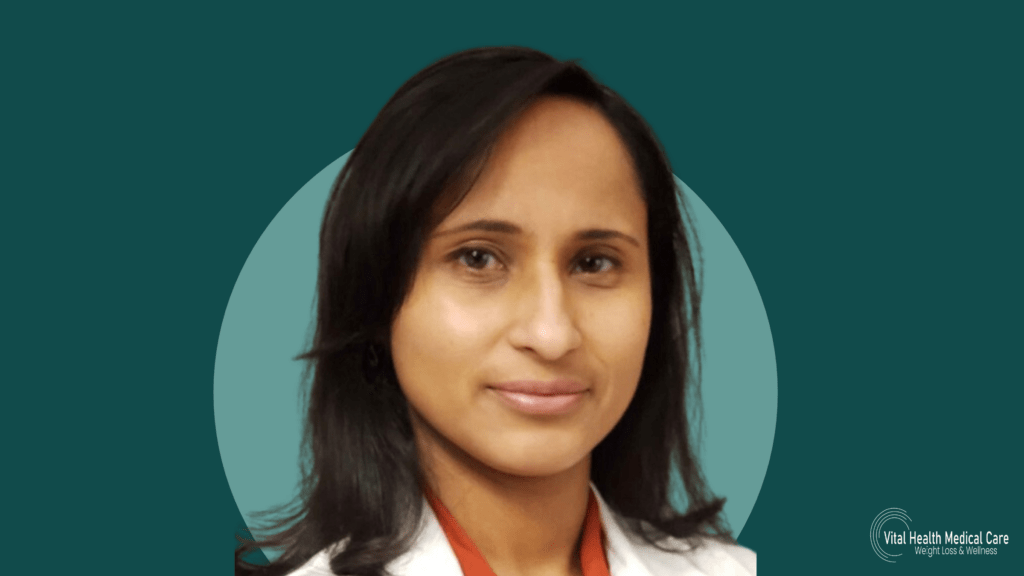
Vital Health Medical Care in Pittsford was created to treat that fuller picture. The clinic was founded in 2022 by Dr. Sanin Syed, who holds dual board certifications from the American Board of Obesity Medicine and the American Board of Internal Medicine, and it sits at 10 Office Parkway, Suite 100, directly across from the Jefferson Road and Clover Street YMCA. Dr. Syed brings more than twenty years of clinical experience, serves as Assistant Professor of Medicine at the University of Rochester Medical Center, and has been featured on NPR’s Evan Dawson show as well as invited to present at the Rochester Academy of Medicine. Patients looking for a Hashimotos weight loss specialist near Rochester are usually looking for something quite specific: a physician who understands autoimmune thyroid disease and obesity medicine as one connected problem rather than two separate appointments.
This guide explains what Hashimoto’s actually does to body weight, which nutrition strategies have real evidence behind them and which do not, how modern obesity medications fit alongside thyroid replacement, and what thorough care looks like here in Monroe County.
What Hashimoto’s Thyroiditis Actually Is, and Why It Complicates Weight Loss
An immune problem that gradually becomes a hormone problem
Hashimoto’s thyroiditis, also called chronic lymphocytic thyroiditis, occurs when the immune system produces antibodies against thyroid peroxidase and thyroglobulin, the machinery the gland uses to manufacture hormone. White blood cells infiltrate the tissue, inflammation becomes chronic, and functional thyroid cells are lost slowly over years. It is the leading cause of hypothyroidism in iodine-sufficient countries including the United States, and published estimates put global prevalence at roughly five percent across all ages, with women affected somewhere in the range of four to ten times more often than men. Those figures vary between studies depending on diagnostic criteria and testing methods, so they describe a population rather than any individual.
The gradual nature of the disease matters clinically. Many patients spend years in a subclinical phase, feeling progressively worse while lab values drift within technically acceptable limits. Others experience transient releases of stored hormone during flares, producing brief episodes of palpitations, anxiety, or sweating that seem to contradict the hypothyroid diagnosis entirely. Weight during this period rarely follows a clean line.
Why a normal TSH does not always mean you feel normal
Thyroid-stimulating hormone is a pituitary signal, not a direct measurement of how well your tissues are using thyroid hormone. Two patients with identical TSH values can differ substantially in free T4, free T3, conversion efficiency, and symptom burden. Levothyroxine replaces T4, which the body must then convert to the biologically active T3, and individuals vary in how efficiently they perform that conversion. Absorption is another variable entirely, since levothyroxine is notably sensitive to coffee, calcium, iron, certain antacids, and food taken too soon after the dose. A patient who swallows the tablet with breakfast coffee every morning may never reach a stable level regardless of the prescribed strength.
The inflammation layer that most weight loss programs ignore
Hashimoto’s is not purely an endocrine condition. It carries a systemic inflammatory component, and chronic low-grade inflammation influences insulin sensitivity, appetite signaling, energy levels, and how readily the body mobilizes stored fat. Autoimmune thyroid disease also clusters with other autoimmune conditions such as celiac disease and pernicious anemia, and with nutritional shortfalls in iron, vitamin D, and vitamin B12 that independently produce fatigue and blunt exercise capacity. A weight loss plan that never tests for any of this is working with a fraction of the relevant information.
Why Conventional Weight Loss Programs Tend to Fail Hashimoto’s Patients
Commercial programs are built around a single assumption: reduce calories, increase movement, results follow. For a patient with treated Hashimoto’s, several things break that assumption at once.
- Resting metabolic rate may sit below what standard calculators predict, so the prescribed calorie target is already too aggressive on day one.
- Fluid retention creates scale fluctuations that mask genuine fat loss and destroy motivation during weeks when real progress is occurring.
- Fatigue limits training volume and intensity, which reduces the muscle-preserving stimulus exactly when it is most needed.
- Aggressive caloric restriction can suppress T4 to T3 conversion further, meaning the harder a patient pushes, the more the metabolic response works against them.
- Coexisting insulin resistance, sleep apnea, perimenopause, or polycystic ovary syndrome go undiagnosed because nobody ordered the labs.
The result is a familiar and demoralizing cycle: strict effort, minimal movement on the scale, an assumption of personal failure, and eventual abandonment. None of that is a character problem. It is a mismatch between the treatment and the biology.
What a Hashimotos Weight Loss Specialist Near Rochester Does Differently
Testing that goes well beyond a single TSH
A thorough autoimmune thyroid workup at an obesity medicine practice typically includes TSH and free T4 as the foundation, with free T3 and thyroid antibodies where the clinical picture warrants them. Just as importantly, it extends past the thyroid entirely. Hemoglobin A1c, fasting glucose and insulin, a lipid panel, liver enzymes, vitamin D, ferritin and full iron studies, vitamin B12, celiac screening where symptoms suggest it, and evaluation for obstructive sleep apnea frequently uncover the drivers that thyroid testing alone would never reveal. Because Hashimoto’s so often travels with these companions, finding and correcting them is usually where the meaningful gains in energy and progress come from.
Body composition analysis rather than a bathroom scale
A scale collapses fat, muscle, bone, and water into one number that tells a Hashimoto’s patient almost nothing useful. Vital Health Medical Care is among the few medical weight loss centers in New York State to build advanced body composition analysis into its programs as a foundation rather than an add-on. The medical-grade analyzer measures body fat percentage while distinguishing visceral fat around the organs from subcutaneous fat, alongside lean muscle mass, bone density, hydration status, and basal metabolic rate.
For autoimmune thyroid patients this changes the conversation entirely. When the scale jumps three pounds during a flare, a scan can show whether that was fluid or fat. When weight holds steady for a month while fat mass falls and lean mass rises, that is progress rather than failure, and seeing it on paper is often what keeps a patient in the program. Monthly repeat scans turn a guessing game into a feedback loop, and they give the physician objective grounds for adjusting the plan rather than simply telling someone to try harder.
One physician managing thyroid and weight as a single problem
Obesity medicine exists as a board-certified subspecialty because obesity is a chronic, relapsing, biologically driven disease rather than a lifestyle verdict. Dr. Syed’s dual certification in obesity medicine and internal medicine means autoimmune thyroid disease and weight are addressed by the same physician, in the same visit, under one coherent plan. Her additional training in lifestyle medicine, nutrition counseling, plant-based medicine, and culinary medicine, together with active membership in the American Society of Obesity Medicine and ongoing continuing education, keeps that plan aligned with a field that changes quickly. As an Assistant Professor at the University of Rochester Medical Center, she also maintains working relationships across the Rochester medical community, which makes coordination with endocrinology or rheumatology straightforward when a case calls for it.
GLP-1 Medications and Hashimoto’s: Suitability, Safety, and Monitoring
How semaglutide and tirzepatide work
The medications reshaping obesity care are the GLP-1 receptor agonists and the dual GIP/GLP-1 receptor agonists. Semaglutide, approved for chronic weight management under the brand name Wegovy and for type 2 diabetes as Ozempic, mimics the body’s own GLP-1 hormone. It slows gastric emptying, increases satiety after meals, and reduces the persistent food preoccupation that many patients describe as the most exhausting part of dieting. Tirzepatide, sold as Zepbound for weight management and Mounjaro for diabetes, acts on both the GLP-1 and GIP receptors, engaging two metabolic pathways simultaneously.
Trial results have been substantial, though they are best read as study averages rather than personal predictions. In the STEP 1 trial, adults on weekly semaglutide 2.4 mg showed a mean weight reduction of roughly 14.9 percent across 68 weeks. In SURMOUNT-1, participants receiving the highest tirzepatide dose averaged approximately 20.9 percent. The head-to-head SURMOUNT-5 trial published in the New England Journal of Medicine in 2025 reported about 20.2 percent with tirzepatide against roughly 13.7 percent with semaglutide at 72 weeks. Real-world results differ considerably based on dose tolerance, adherence, coexisting conditions, and individual biology, so the useful question is never which trial number is largest but which medication and dose actually fits your situation and your coverage, which is precisely the sort of judgment a consultation exists to provide.
Does the thyroid warning on these medications rule out Hashimoto’s patients?
This question causes a great deal of unnecessary worry, so it deserves a direct answer. Both semaglutide and tirzepatide carry a boxed warning based on thyroid C-cell tumors observed in rodent studies. The labeled contraindication is a personal or family history of medullary thyroid carcinoma or Multiple Endocrine Neoplasia syndrome type 2. Hashimoto’s thyroiditis is an entirely different condition, an autoimmune inflammatory process rather than a C-cell malignancy, and it is not itself a contraindication to these medications. Many patients with treated Hashimoto’s are appropriate candidates. Because the deciding factor is family history that patients often have never been asked about, this belongs in a thorough consultation before any prescription is written rather than in an online questionnaire.
Why your levothyroxine dose may need adjusting as you lose weight
Here is a practical detail that clinics treating weight and thyroid separately routinely miss. Levothyroxine dosing is partly weight-based, so meaningful weight loss can leave a previously correct dose too high, producing symptoms of overtreatment such as palpitations, tremor, anxiety, or heat intolerance. Published case reports describe exactly this sequence in patients starting semaglutide. Delayed gastric emptying may also change how levothyroxine is absorbed. Neither issue is alarming when it is anticipated, and both are managed simply by rechecking thyroid function periodically throughout active weight loss, which is a strong practical argument for keeping both conditions under one physician’s care.
Evidence-Based Nutrition for Hashimoto’s: What the Research Actually Supports
Selenium has the strongest evidence, within limits
Selenium is essential for both thyroid function and immune regulation, and it has the most substantial evidence base among supplements marketed to Hashimoto’s patients. A systematic review and meta-analysis published in 2025, pooling twenty-one randomized controlled trials and roughly 1,610 participants, reported significant reductions in thyroid peroxidase antibody levels at three and six months of supplementation. Several trials also observed modest reductions in TSH and improvements in well-being. What the evidence does not show is that lower antibody titers reliably translate into weight loss, and the American Thyroid Association has noted that data remain limited on whether selenium can slow progression to overt hypothyroidism. Selenium status also follows a U-shaped curve, meaning too much carries risk just as too little does, so dosing genuinely warrants a physician’s input rather than a guess from a product label.
Iodine: the more-is-better assumption that backfires
Thyroid supplements sold online frequently contain high-dose iodine on the reasoning that iodine supports thyroid hormone production. In autoimmune thyroid disease this can make matters worse, and research has linked elevated iodine combined with selenium deficiency to intensified autoimmune activity and accelerated decline in thyroid function. Some over-the-counter thyroid products have also been found to contain undeclared thyroid hormone. Bringing every bottle you take to your appointment, so it can be reviewed against your labs and prescriptions, is one of the highest-value five minutes in the entire process.
Gluten, the autoimmune protocol, and elimination diets
Elimination diets are the most passionately debated topic in the Hashimoto’s community, and the honest summary is that the evidence is encouraging in some respects and unimpressive in others. A frequently cited pilot study of the Autoimmune Protocol diet delivered as part of a ten-week multidisciplinary lifestyle program found statistically significant improvements in quality of life across all eight subscales of the SF-36, a marked drop in symptom burden, and roughly a twenty-nine percent reduction in high-sensitivity C-reactive protein as a marker of inflammation. Notably, it found no statistically significant change in thyroid function or thyroid antibodies, and the sample was small. Small trials of gluten-free eating in Hashimoto’s have similarly reported antibody reductions without consistent functional improvement.
The reasonable interpretation is that some patients feel considerably better on these approaches, that celiac disease should be genuinely ruled out rather than assumed, and that restrictive diets carry real costs in nutrient adequacy, social life, and sustainability. Whether an elimination trial is worth attempting is an individual judgment best made with a physician and a registered dietitian who can monitor what happens rather than a decision made from a social media post.
Protein, iron, vitamin D, and B12
When resting metabolic rate is already suppressed, protecting lean tissue becomes the priority rather than an afterthought. Adequate protein distributed across the day rather than concentrated at dinner, combined with resistance training two or three times weekly, does most of the work. Correcting iron deficiency matters enormously in this population, since low ferritin produces fatigue that patients and physicians alike misattribute to the thyroid, and iron also participates in thyroid hormone synthesis. Vitamin D insufficiency is common in autoimmune disease and common in upstate New York for obvious reasons. Registered dietitians at Vital Health Medical Care build meal plans around each patient’s preferences and schedule, and the culinary medicine program teaches the practical cooking skills that turn a written plan into food actually eaten on a Tuesday night.
Movement, Sleep, and Managing Flares Through a Rochester Winter
Exercise programming for autoimmune thyroid patients has to respect fatigue rather than override it. Resistance training preserves the muscle that supports metabolic rate, and it can usually be maintained even during low-energy periods by reducing volume rather than stopping altogether. Walking, which Rochester makes pleasant along the Erie Canal path and the Genesee Riverway Trail for much of the year, is underrated for both fat loss and mood. During the months when those routes are buried, the YMCA directly across from the clinic is convenient, though the clinic’s individualized exercise planning is built around whatever a patient will realistically do rather than an ideal routine they will abandon in February.
Sleep deserves equal weight. Short sleep and untreated sleep apnea reliably disrupt the hormones governing hunger and fullness, and both are common in patients carrying excess weight. Our long overcast winters add reduced activity, lower vitamin D, and the appetite shifts that accompany seasonal mood changes. Behavioral and lifestyle coaching addresses emotional eating, stress-driven patterns, and motivation directly, because for most patients the psychological dimension is not a soft supplement to medical treatment. It is frequently what determines whether the results hold.
What to Expect as a Patient at Vital Health Medical Care in Pittsford
The patient journey follows four deliberate stages.
- Comprehensive initial consultation. A full review of medical history, thyroid treatment to date, previous weight loss attempts, current medications and supplements, symptoms, and personal goals.
- Advanced body composition scan. Painless, non-invasive, and completed within minutes, establishing a detailed baseline instead of a single number.
- A customized plan. The appropriate combination of FDA-approved medication where indicated, nutrition guidance from registered dietitians, meal replacement options if useful, individualized exercise programming, behavioral coaching, and health coaching.
- Ongoing monitoring and adjustment. Repeat scans, repeat labs including thyroid function, and plan revisions as your body and your thyroid requirements change.
The Pittsford office serves patients throughout Monroe County and well beyond, drawing from Brighton, Penfield, Webster, Greece, Henrietta, Irondequoit, Fairport, Victor, and Canandaigua, with many patients traveling in from across the Finger Lakes.
Insurance, Referrals, and Getting Started
Cost stops more people from seeking medical weight management than any other factor, so it is worth addressing plainly. Vital Health Medical Care works with a wide range of insurance providers, and coverage frequently extends to consultations, nutritional counseling, behavioral support, follow-up visits, and in many cases FDA-approved medications. Coverage rules for weight loss medications specifically vary considerably between plans and have shifted from year to year, so any figure quoted before verification is an estimate rather than a quote. The administrative team verifies benefits for every new patient before a program begins, which means you know where you stand before committing to anything. No physician referral is required to schedule an appointment.
Frequently Asked Questions About Hashimoto’s and Weight Loss
Can you actually lose weight with Hashimoto’s thyroiditis?
Yes. Properly treated Hashimoto’s does not prevent weight loss, but it does mean a generic calorie-cutting plan is more likely to stall. Resting metabolic rate, fluid balance, energy levels, and inflammation are all affected. The approaches that work generally combine optimized thyroid replacement, a nutrition plan designed to preserve muscle, resistance training scaled to current energy, correction of any iron or vitamin D deficiency, and where clinically appropriate an FDA-approved obesity medication. Because Hashimoto’s is usually one factor among several, the evaluation needs to cover the whole metabolic picture rather than the thyroid alone.
Does treating Hashimoto’s with levothyroxine cause weight loss?
Rarely to a clinically meaningful degree. Levothyroxine corrects a hormone deficiency and is essential for your health, but it is not a weight loss medication. Research including a widely cited Boston Medical Center cohort found that roughly half of newly treated hypothyroid patients lost any weight at all, with modest average losses among that group, and much of the early change reflecting fluid rather than fat. Expecting thyroid replacement to reverse years of weight gain leads to considerable and unnecessary discouragement. Individual responses vary, so your own trajectory is worth reviewing with a physician who can see your labs alongside your history.
Should I go gluten-free if I have Hashimoto’s?
Only after celiac disease has been genuinely evaluated, since testing requires gluten in the diet and going gluten-free first makes accurate diagnosis difficult. Beyond that, the evidence is mixed. Small studies have reported reduced antibody levels on gluten-free eating, and a pilot study of the broader Autoimmune Protocol found significant improvements in quality of life and inflammatory markers without measurable changes in thyroid function or antibodies. Some patients feel considerably better and some notice nothing, so a supervised trial with clear criteria for judging the result is more useful than an indefinite restriction adopted on faith.
Should I take selenium for Hashimoto’s?
Possibly, with medical guidance. A 2025 meta-analysis covering twenty-one randomized trials found significant reductions in thyroid peroxidase antibodies at three and six months of supplementation, with some trials also showing modest TSH reductions. What has not been demonstrated is that this produces weight loss. Selenium also carries risk at excessive intake, so the dose and the decision belong with a physician who can review your levels rather than with a supplement label promising thyroid support.
Can I take Wegovy or Zepbound if I have Hashimoto’s?
In most cases yes. The boxed warning on these medications concerns medullary thyroid carcinoma and Multiple Endocrine Neoplasia syndrome type 2, which are distinct conditions from autoimmune thyroiditis. Hashimoto’s is not a contraindication. What does require attention is monitoring, because weight loss can change your levothyroxine requirement and delayed gastric emptying may affect absorption of your thyroid medication. A physician managing both conditions should recheck thyroid function periodically during treatment, and any personal or family history of medullary thyroid cancer or MEN2 must be disclosed before starting.
Do I need an endocrinologist or a weight loss specialist?
Often the answer is one physician who handles both. Straightforward Hashimoto’s with stable replacement therapy is well within the scope of an internist, and when weight is the primary concern, a physician board-certified in obesity medicine brings tools that general practice does not, including body composition analysis, medication management, and structured behavioral support. Complex cases such as large goiters, nodules requiring biopsy, or difficult-to-control thyroid function warrant endocrinology involvement, and coordinated referral within the Rochester medical community is routine.
Is Hashimoto’s the reason I cannot lose weight?
It is frequently a contributing factor rather than the whole explanation. Clinical estimates commonly attribute somewhere around five to ten pounds to untreated hypothyroidism, a portion of which is retained fluid rather than fat. Larger gains usually involve additional drivers such as insulin resistance, sleep disruption, medication effects, perimenopause, or age-related muscle loss. Determining how much of your own situation traces to the thyroid requires labs and a clinical history, which is exactly what a comprehensive assessment is designed to produce.
Do I need a referral, and will insurance cover this?
No referral is required at Vital Health Medical Care. Coverage varies by plan, and while consultations, nutrition counseling, and behavioral support are covered under many plans, prescription coverage for weight loss medications is more variable. Rather than working from estimates, the clinic verifies your specific benefits before your program begins. You can call 585-662-5786 to schedule.
Take the Next Step Toward Feeling Like Yourself Again
Hashimoto’s explains part of why this has been so difficult. It does not explain all of it, and it has never been a reason to stop trying. What changes outcomes is a physician who tests thoroughly instead of checking one number, who measures body composition rather than trusting a scale, who understands how thyroid replacement and modern obesity medications interact, and who stays with you through the adjustments that any real weight loss journey requires.
That combination is what patients are looking for when they search for a Hashimotos weight loss specialist near Rochester. Dr. Sanin Syed and the team at Vital Health Medical Care bring dual board certification, more than twenty years of clinical experience, advanced body composition technology, FDA-approved medication management, registered dietitian support, culinary medicine, individualized exercise planning, and behavioral coaching together under one roof in Pittsford.
Meet Dr. Sanin Syed – Leading Medical Weight Loss Specialist in Rochester, NY
Dr. Sanin Syed, founder and CEO of Vital Health Medical Care, is a board-certified obesity and internal medicine specialist. With over two decades of experience, Dr. Syed is dedicated to helping her patients achieve lasting weight loss and a healthier lifestyle.
- Recognized Expertise: Dr. Syed’s knowledge has been featured on NPR’s Evan Dawson Show and in the Rochester Academy of Medicine.
- Commitment to Patient Health: She focuses on building sustainable health habits and lifestyle changes that support long-term success.
Our clinic, located at 10 Office Parkway, Suite 100, Pittsford, NY, provides a welcoming and professional setting for patients who are ready to make positive changes.
Why Choose Vital Health Medical Care?
Experienced Weight Loss Doctor
Dr. Sanin Syed is one of the leading weight loss doctors in New York, with over 20 years of experience in medicine and obesity management. She holds dual board certifications from the American Board of Obesity Medicine and the American Board of Internal Medicine, ensuring you receive the highest standard of care.
Personalized Care
At Vital Health Medical Care, we believe in a personalized approach to weight loss. Our programs are tailored to meet your unique needs, ensuring you receive the best possible care and support on your weight loss journey.
Comprehensive Support
We provide ongoing support throughout your weight loss journey, including regular monitoring and adjustments to your plan as needed. Our comprehensive approach ensures you have the resources and guidance necessary to achieve your weight loss goals.
Insurance Acceptance
We understand that managing healthcare costs is important. That’s why we accept a wide range of insurance plans to make our weight loss treatments accessible and affordable for everyone.
Nutritional Counseling
Our qualified nutritionists create personalized diet plans that fit your lifestyle and dietary preferences. We provide expert guidance on making healthy food choices that support your weight loss goals.
Physician Consultation
Our experienced physicians, led by Dr. Syed, will work with you to find the best medication and treatment plan for your needs. We utilize FDA-approved medications such as Wegovy and Zepbound to support your weight loss efforts.
Health Coaching
Our health coaches provide ongoing support and motivation, helping you stay on track with your weight loss goals. They offer practical advice and encouragement to help you overcome challenges and achieve lasting success.
Culinary Medicine
Learn how to prepare healthy, delicious meals that support your weight loss journey with guidance from our culinary medicine experts. We offer cooking classes and workshops to help you develop the skills needed to maintain a healthy diet.
Meal Replacement
We offer meal replacement options that are nutritious and convenient, helping you manage your calorie intake effectively. Our meal replacements are designed to support your weight loss goals while ensuring you receive essential nutrients.
Individualized Exercise Plan
Our fitness experts develop personalized exercise plans tailored to your fitness level and goals. We provide guidance on the best types of exercise for weight loss and overall health, ensuring you achieve optimal results.
Comprehensive Weight Loss Treatment in Rochester, New York
Vital Health Medical Care offers evidence-based weight loss treatments designed to help you succeed. We take a holistic approach, integrating medication, diet, exercise, and behavioral changes to ensure long-term success. Contact us today to schedule a consultation and start your journey.