

Hypothyroid Weight Loss Doctor Rochester NY: How to Finally Lose Weight With an Underactive Thyroid
If you live in the Greater Rochester area and you have been told your thyroid is “normal now” while the scale refuses to move, you are not imagining things and you are not failing at willpower. Hypothyroidism changes how your body produces energy, stores fat, retains fluid, and responds to the exact same diet that seems to work for everyone else. Yet most patients are handed a levothyroxine prescription, a follow-up lab slip for twelve weeks out, and very little else.
Vital Health Medical Care in Pittsford was built to close that gap. Founded in 2022 by Dr. Sanin Syed, who holds dual board certifications from the American Board of Obesity Medicine and the American Board of Internal Medicine, the clinic sits at 10 Office Parkway, Suite 100, directly across from the Jefferson Road and Clover Street YMCA. Dr. Syed brings more than twenty years of clinical experience, an appointment as Assistant Professor of Medicine at the University of Rochester Medical Center, and recognition that includes a feature on NPR’s Evan Dawson show and an invitation to speak at the Rochester Academy of Medicine. Patients searching for a hypothyroid weight loss doctor Rochester NY families can actually build a long-term relationship with are usually looking for exactly this combination: internal medicine depth, obesity medicine specialization, and time to get the details right.
This guide explains what an underactive thyroid genuinely does to body weight, what thyroid hormone replacement can and cannot accomplish, how modern obesity medicine fits alongside thyroid treatment, and what evidence-based care looks like here in Monroe County.
Why an Underactive Thyroid Makes Weight Loss So Much Harder
What the thyroid actually controls
The thyroid is a small butterfly-shaped gland wrapped around the front of the windpipe, and its hormones function as the throttle on cellular energy use. When the gland underproduces, the entire system downshifts. Resting energy expenditure falls, thermogenesis drops, gut motility slows, and the kidneys hold onto sodium and water. The familiar cluster of symptoms follows: fatigue, cold intolerance, constipation, dry skin, hair thinning, brain fog, heavier menstrual periods, and a steady creep upward on the scale.
Thyroid disease is far from rare. Health systems in our region, including Rochester Regional Health, note that close to twenty million Americans live with some form of thyroid disorder, and that women are roughly five to eight times more likely than men to receive a thyroid diagnosis. That gender skew matters enormously in weight management, because women already contend with hormonal shifts across the menstrual cycle, pregnancy and postpartum recovery, perimenopause, and conditions such as polycystic ovary syndrome. Layer hypothyroidism on top and the metabolic headwind becomes substantial.
How much weight does hypothyroidism really cause?
This is where honest medicine matters. Clinical sources generally estimate that untreated hypothyroidism accounts for somewhere in the range of five to ten pounds of gain, and researchers have long noted that a meaningful share of that is retained fluid rather than fat tissue. Individual experience varies widely, which is precisely why a physician needs to examine your own history rather than apply a population average to you. If you have gained forty pounds over six years, your thyroid may be one contributing factor among several, and treating only the thyroid would leave most of the problem untouched.
Understanding that distinction is liberating rather than discouraging. It reframes the question from “why isn’t my thyroid medication working” to “what else is driving this, and what treats that?”
The Levothyroxine Gap: Why Normal Labs Do Not Automatically Mean Weight Loss
Levothyroxine, the synthetic T4 used to treat most hypothyroidism, is a genuinely excellent medication. It restores hormone levels, resolves symptoms, and protects cardiovascular and cognitive health. What it is not is a weight loss drug, and the research on this point is consistent enough that the American Thyroid Association has published on it directly.
A frequently cited retrospective cohort from Boston Medical Center, published in 2014 and covering roughly one hundred adults with newly diagnosed primary hypothyroidism, reported that only about half of patients lost any weight after starting therapy, with an average reduction in the neighborhood of eight to nine pounds among those who did. The investigators concluded that, contrary to popular belief, no clinically significant weight change followed the start of treatment for the group as a whole. Later observational work from other centers reached similar conclusions. These are averages drawn from specific study populations and your own response may differ considerably, which is exactly the sort of nuance worth walking through with a physician who can look at your labs, your medication timing, and your history together.
So what explains the gap? Several things commonly stack up at once:
- Absorption problems. Levothyroxine is notoriously sensitive to coffee, calcium, iron, certain antacids, and food taken too close to the dose.
- Conversion variability. T4 must be converted to active T3, and individuals differ in how efficiently they do this.
- Coexisting obesity. Obesity and hypothyroidism frequently occur in the same person without one causing the other, so correcting the thyroid leaves the obesity untreated.
- Insulin resistance, sleep apnea, medication side effects, chronic stress, and perimenopause, any of which can independently drive weight gain.
A thorough evaluation separates these threads instead of collapsing them into a single explanation.
What a Hypothyroid Weight Loss Doctor Rochester NY Patients Trust Does Differently
A complete metabolic workup, not just a TSH
Thyroid-stimulating hormone alone is a starting point, not a full picture. Comprehensive metabolic assessment at a dedicated obesity medicine practice typically extends to free T4 and, where clinically indicated, free T3 and thyroid antibodies to identify Hashimoto’s thyroiditis. It also looks beyond the thyroid entirely, because hemoglobin A1c, fasting insulin, a lipid panel, liver enzymes, vitamin D, iron studies, and screening for obstructive sleep apnea often reveal the drivers that thyroid testing alone would miss. Undiagnosed or undertreated hypothyroidism is a common cause of metabolic sluggishness, and thyroid function testing is a standard part of the initial workup at Vital Health Medical Care for that reason.
Body composition analysis rather than a bathroom scale
A scale reports a single number that blends fat, muscle, bone, and water into one uninformative total. That is a particular problem in hypothyroid patients, whose weight fluctuations often reflect fluid shifts. Vital Health Medical Care is among the few medical weight loss centers in New York State to make advanced body composition analysis a foundational part of its programs. The medical-grade analyzer measures body fat percentage, distinguishing visceral fat around the organs from subcutaneous fat, alongside lean muscle mass, bone density, hydration status, and basal metabolic rate.
The clinical value is immediate. If a patient drops six pounds in a month and the scan shows five of them came from lean mass, the plan needs correcting right away. If someone’s weight holds steady while fat mass falls and muscle rises, that is progress a scale would have called failure. Scans repeated at monthly intervals turn a guessing game into a feedback loop, and they give hypothyroid patients objective proof that something is changing even during the plateaus that make people quit.
Treating obesity as a disease in its own right
Obesity medicine is a recognized subspecialty with its own board certification precisely because obesity is a chronic, relapsing, biologically driven condition rather than a character flaw. Dr. Syed’s dual certification in obesity medicine and internal medicine means thyroid disease and weight are managed by the same physician, in the same visit, with one coherent plan. Her additional training in lifestyle medicine, nutrition counseling, plant-based medicine, and culinary medicine, along with active membership in the American Society of Obesity Medicine and ongoing continuing medical education, keeps that plan current with a field that is changing quickly.
GLP-1 Medications and Thyroid Disease: What Rochester Patients Should Know
How semaglutide and tirzepatide work
The two medication classes reshaping obesity care are the GLP-1 receptor agonists and the dual GIP/GLP-1 receptor agonists. Semaglutide, approved for chronic weight management under the brand name Wegovy and for type 2 diabetes as Ozempic, mimics the body’s natural GLP-1 hormone. It slows gastric emptying, increases satiety after meals, and quiets the persistent food preoccupation that many patients describe as the hardest part of dieting. Tirzepatide, marketed as Zepbound for weight management and Mounjaro for diabetes, acts on both the GLP-1 and GIP receptors, addressing two metabolic pathways at once.
Trial results have been striking, though they should be read as study averages rather than personal forecasts. In the STEP 1 trial, adults taking weekly semaglutide 2.4 mg showed a mean weight reduction of roughly 14.9 percent over 68 weeks. In SURMOUNT-1, participants on the highest tirzepatide dose averaged approximately 20.9 percent. A head-to-head comparison published in the New England Journal of Medicine in 2025, SURMOUNT-5, reported about 20.2 percent with tirzepatide against roughly 13.7 percent with semaglutide at 72 weeks. Real-world outcomes vary with dose tolerance, adherence, and individual biology, so the practical question for any given patient is not which number is biggest but which medication, at which dose, suits their physiology, their other conditions, and their insurance coverage. That is a conversation for a consultation, not a comparison chart.
The thyroid warning on GLP-1 labels, explained properly
This causes real and avoidable anxiety, so it deserves a clear answer. Both semaglutide and tirzepatide carry a boxed warning based on thyroid C-cell tumors observed in rodent studies. The labeled contraindication is a personal or family history of medullary thyroid carcinoma or Multiple Endocrine Neoplasia syndrome type 2. Hypothyroidism, including autoimmune Hashimoto’s thyroiditis, is a different condition entirely and is not itself a contraindication. Many people with a treated underactive thyroid are appropriate candidates. Because family history is the deciding factor and it is not always known, this is exactly the sort of question a physician should walk through with you before any prescription is written.
Why your levothyroxine dose may need adjusting as you lose weight
Here is a detail that a clinic treating weight and thyroid separately can easily miss. Levothyroxine is dosed partly according to body weight, so substantial weight loss can leave a previously correct dose too high, producing symptoms of overtreatment such as palpitations, anxiety, tremor, or heat intolerance. Published case reports describe exactly this scenario in patients starting semaglutide. Delayed gastric emptying may also alter how levothyroxine is absorbed. Neither issue is dangerous when anticipated, and both are straightforward to manage with periodic thyroid function testing during active weight loss, which is a strong practical argument for having one physician overseeing both.
Nutrition, Movement, and Behavior Strategies Built for Hypothyroid Patients
Protect muscle, because muscle protects metabolism
When resting metabolic rate is already suppressed, losing lean tissue makes a difficult situation worse. Two habits do most of the work here. The first is adequate protein spread across the day rather than concentrated at dinner. The second is resistance training two or three times weekly, which does not require a gym membership, though the YMCA directly across from the clinic is convenient for patients who prefer one. Registered dietitians at Vital Health Medical Care build meal plans around each patient’s preferences and schedule, and the culinary medicine program teaches the cooking skills that turn a plan on paper into food actually eaten on a Tuesday night.
Timing matters more than most people realize
Levothyroxine is typically taken on an empty stomach, well before breakfast, with a meaningful gap before coffee, calcium supplements, or iron. Patients who take their tablet with their morning coffee and wonder why their labs never settle have often found the entire explanation in that one habit. Similarly, patients on injectable weight loss medication generally do better with smaller, slower, protein-forward meals, since the gastrointestinal side effects that cause most discontinuations tend to appear when large meals meet delayed gastric emptying.
Iodine, selenium, and the supplement question
Thyroid supplements marketed online frequently contain high-dose iodine, which can worsen rather than help autoimmune thyroid disease, and some products have been found to contain undeclared thyroid hormone. Selenium has a more interesting evidence base in Hashimoto’s, though findings are mixed and dosing matters. The reasonable path is to bring any supplement bottle to your appointment and let a physician review it against your labs and medications rather than guessing from a product label.
Sleep, stress, and the Rochester winter
Short sleep and untreated sleep apnea reliably disrupt appetite-regulating hormones, and both are common in patients carrying excess weight. Our long overcast winters add their own pressure through reduced activity, lower vitamin D, and the appetite changes that accompany seasonal mood shifts. Behavioral and lifestyle coaching at the clinic addresses emotional eating, stress-driven habits, and motivation directly, because the psychological dimension of weight is not a soft add-on to medical treatment. It is frequently the part that determines whether results last.
What to Expect as a Patient at Vital Health Medical Care in Pittsford
The patient journey follows four deliberate stages.
- Comprehensive initial consultation. A full review of medical history, current health status, previous weight loss attempts, thyroid treatment, medications, and personal goals.
- Advanced body composition scan. Painless, non-invasive, and completed within minutes, producing a detailed baseline rather than a single number.
- A customized plan. The right combination of FDA-approved medication where appropriate, nutrition guidance, meal replacement options if helpful, individualized exercise programming, behavioral coaching, and health coaching.
- Ongoing monitoring and adjustment. Repeat scans, repeat labs including thyroid function, and plan revisions as your body changes.
The Pittsford location serves patients across Monroe County and well beyond, drawing from Brighton, Penfield, Webster, Greece, Henrietta, Fairport, Victor, and Canandaigua, with many patients traveling from across the Finger Lakes region.
Insurance, Referrals, and Getting Started
Cost is the barrier that stops most people from seeking medical weight management, and it is worth addressing plainly. Vital Health Medical Care works with a broad range of insurance providers, and coverage frequently extends to consultations, nutritional counseling, behavioral support, follow-up visits, and in many cases FDA-approved medications. Coverage rules for weight loss medications specifically vary a great deal between plans and change from year to year, so estimates offered before verification are exactly that. The clinic’s administrative team verifies benefits for every new patient before a program begins, which means you find out where you stand before committing to anything. No physician referral is required to schedule.
Frequently Asked Questions About Hypothyroidism and Weight Loss
Can you actually lose weight if you have hypothyroidism?
Yes. Properly treated hypothyroidism does not prevent weight loss. It does mean that a generic calorie-cutting plan is more likely to stall, because resting metabolic rate, fluid balance, and energy levels are all affected. The successful approach usually combines optimized thyroid replacement, a nutrition plan built to preserve muscle, resistance training, and where clinically appropriate an FDA-approved obesity medication. Because hypothyroidism is often only one of several contributing factors, the assessment should look at the whole metabolic picture rather than the thyroid alone.
Does levothyroxine cause weight loss?
Not in a clinically meaningful way for most people. Research including a widely cited Boston Medical Center cohort found that only around half of newly treated patients lost any weight at all, with modest average losses in that group, and much of the early change attributable to fluid rather than fat. Thyroid hormone replacement corrects a hormone deficiency and is essential for your health. It is not designed as a weight loss treatment, and expecting it to serve as one leads to a great deal of unnecessary discouragement. Individual responses vary, so your own trajectory is worth reviewing with your physician.
How much weight gain is actually caused by an underactive thyroid?
Commonly cited clinical estimates put it in the range of five to ten pounds for untreated hypothyroidism, a portion of which reflects water retention rather than fat tissue. Larger gains usually involve additional factors such as insulin resistance, medication effects, sleep disruption, aging-related muscle loss, or menopause. Sorting out how much of your own gain traces back to the thyroid requires labs and a clinical history, not a rule of thumb.
Can I take Wegovy or Zepbound if I have Hashimoto’s or hypothyroidism?
In most cases yes. The boxed warning on these medications concerns medullary thyroid carcinoma and Multiple Endocrine Neoplasia syndrome type 2, which are distinct conditions from an underactive or autoimmune thyroid. Hypothyroidism and Hashimoto’s thyroiditis are not contraindications. What does need attention is monitoring, since weight loss can change your levothyroxine requirement and delayed gastric emptying may affect its absorption. A physician managing both conditions together should recheck thyroid function periodically during treatment. A personal or family history of medullary thyroid cancer or MEN2 should be disclosed before starting.
What tests should a weight loss doctor order if I have thyroid symptoms?
Expect TSH and free T4 as a foundation, with free T3 and thyroid antibodies added where the clinical picture warrants. A complete obesity medicine workup also generally includes hemoglobin A1c, fasting glucose and insulin, a lipid panel, liver function tests, vitamin D, iron studies including ferritin, and screening questions for obstructive sleep apnea. Body composition analysis complements the bloodwork by showing where your weight actually sits across fat, muscle, and water.
Do I need a referral to see a weight loss doctor in Rochester, NY?
No referral is required at Vital Health Medical Care. You can call 585-662-5786 directly to schedule a consultation at the Pittsford office. Patients who already see an endocrinologist or primary care physician elsewhere are welcome to continue those relationships, and coordination of care is routine.
Will insurance cover medical weight loss treatment in New York?
Frequently, though the specifics depend heavily on your individual plan. Consultations, nutrition counseling, and behavioral support are covered under many plans, while prescription coverage for weight loss medications is more variable and has shifted noticeably in recent years. Rather than guessing, the clinic verifies your benefits before your program starts so you have real numbers rather than estimates.
How long before I see results?
Thyroid symptoms often begin improving within several weeks of dose optimization, while thyroid levels themselves are typically rechecked around six to eight weeks after a change. Weight results follow a longer timeline. The major medication trials measured outcomes across roughly 68 to 72 weeks, and meaningful body composition change usually becomes visible on scans within the first two to three months even when scale weight is stubborn. Individual timelines differ considerably based on starting point, medication tolerance, and adherence, which is why monthly monitoring is built into the program rather than left to chance.
Take the Next Step Toward a Healthier You
An underactive thyroid explains part of the struggle. It rarely explains all of it, and it never has to be the end of the story. What changes outcomes is a physician who tests thoroughly, measures what actually matters, understands how thyroid replacement and modern obesity medications interact, and stays with you through the adjustments that every real weight loss journey requires.
That is what patients find when they look for a hypothyroid weight loss doctor Rochester NY residents can trust for the long term. Dr. Sanin Syed and the team at Vital Health Medical Care combine dual board certification, more than twenty years of clinical experience, advanced body composition technology, FDA-approved medication management, registered dietitian support, culinary medicine, individualized exercise planning, and behavioral coaching under a single roof in Pittsford.
Meet Dr. Sanin Syed – Leading Medical Weight Loss Specialist in Rochester, NY
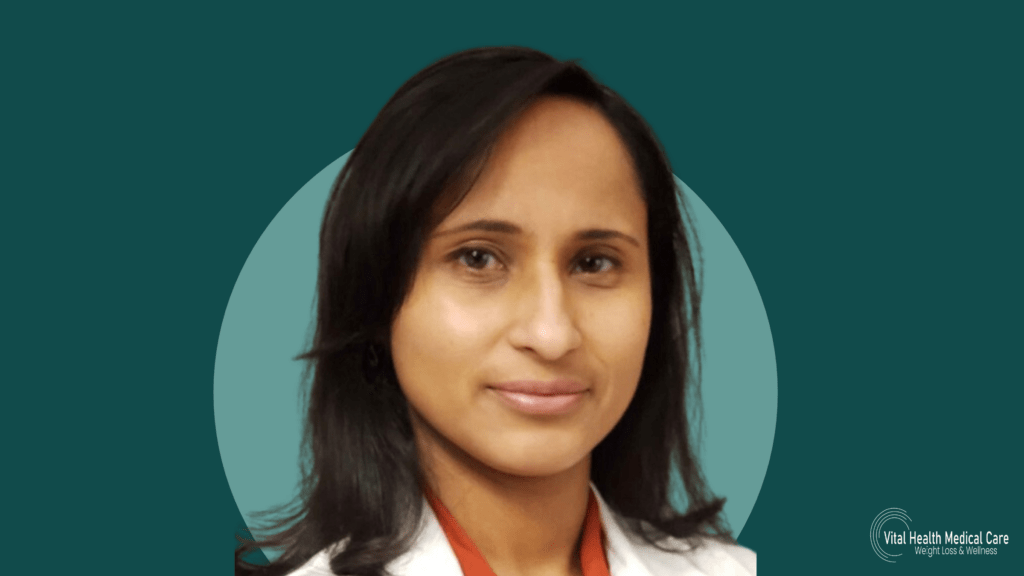
Dr. Sanin Syed, founder and CEO of Vital Health Medical Care, is a board-certified obesity and internal medicine specialist. With over two decades of experience, Dr. Syed is dedicated to helping her patients achieve lasting weight loss and a healthier lifestyle.
- Recognized Expertise: Dr. Syed’s knowledge has been featured on NPR’s Evan Dawson Show and in the Rochester Academy of Medicine.
- Commitment to Patient Health: She focuses on building sustainable health habits and lifestyle changes that support long-term success.
Our clinic, located at 10 Office Parkway, Suite 100, Pittsford, NY, provides a welcoming and professional setting for patients who are ready to make positive changes.
Why Choose Vital Health Medical Care?
Experienced Weight Loss Doctor
Dr. Sanin Syed is one of the leading weight loss doctors in New York, with over 20 years of experience in medicine and obesity management. She holds dual board certifications from the American Board of Obesity Medicine and the American Board of Internal Medicine, ensuring you receive the highest standard of care.
Personalized Care
At Vital Health Medical Care, we believe in a personalized approach to weight loss. Our programs are tailored to meet your unique needs, ensuring you receive the best possible care and support on your weight loss journey.
Comprehensive Support
We provide ongoing support throughout your weight loss journey, including regular monitoring and adjustments to your plan as needed. Our comprehensive approach ensures you have the resources and guidance necessary to achieve your weight loss goals.
Insurance Acceptance
We understand that managing healthcare costs is important. That’s why we accept a wide range of insurance plans to make our weight loss treatments accessible and affordable for everyone.
Nutritional Counseling
Our qualified nutritionists create personalized diet plans that fit your lifestyle and dietary preferences. We provide expert guidance on making healthy food choices that support your weight loss goals.
Physician Consultation
Our experienced physicians, led by Dr. Syed, will work with you to find the best medication and treatment plan for your needs. We utilize FDA-approved medications such as Wegovy and Zepbound to support your weight loss efforts.
Health Coaching
Our health coaches provide ongoing support and motivation, helping you stay on track with your weight loss goals. They offer practical advice and encouragement to help you overcome challenges and achieve lasting success.
Culinary Medicine
Learn how to prepare healthy, delicious meals that support your weight loss journey with guidance from our culinary medicine experts. We offer cooking classes and workshops to help you develop the skills needed to maintain a healthy diet.
Meal Replacement
We offer meal replacement options that are nutritious and convenient, helping you manage your calorie intake effectively. Our meal replacements are designed to support your weight loss goals while ensuring you receive essential nutrients.
Individualized Exercise Plan
Our fitness experts develop personalized exercise plans tailored to your fitness level and goals. We provide guidance on the best types of exercise for weight loss and overall health, ensuring you achieve optimal results.
Comprehensive Weight Loss Treatment in Rochester, New York
Vital Health Medical Care offers evidence-based weight loss treatments designed to help you succeed. We take a holistic approach, integrating medication, diet, exercise, and behavioral changes to ensure long-term success. Contact us today to schedule a consultation and start your journey.