

How to Lose Weight Safely: A New York Physician’s Definitive Guide
In the quest for weight loss, the internet can feel like a minefield of misinformation. From extreme diets and unproven supplements to “quick fixes” that promise unrealistic results, it’s easy to get lost in advice that is not only ineffective but potentially dangerous. The most important question you can ask on this journey is not just “how do I lose weight?” but how to lose weight safely.
True safety in weight loss isn’t about a single diet or exercise plan; it’s a holistic process guided by science and a deep understanding of your individual body. At Vital Health Medical Care in Rochester, NY, we are dedicated to providing that guidance. As a board-certified specialist in both Internal Medicine and Obesity Medicine, our founder, Dr. Sanin Syed, has built our programs on the foundational principle of “health first.” This guide will provide you with a physician’s perspective on what safe, sustainable weight loss truly entails.
The Dangers of “Fast” Weight Loss: What Safety Really Means
Before we explore the right way, it’s critical to understand the risks of the wrong way. Unsafe, rapid weight loss—typically more than 2-3 pounds per week can have serious health consequences. Your body is not designed to shed weight at an extreme pace.
Unsafe methods often lead to:
-
Significant Muscle Loss: When you lose weight too quickly, your body breaks down calorie-burning muscle tissue for energy, not just fat. This cripples your metabolism and makes future weight regain almost inevitable.
-
Nutrient Deficiencies: Severely restrictive diets can deprive your body of essential vitamins and minerals, leading to fatigue, hair loss, and a weakened immune system.
-
Gallstone Formation: Rapid weight loss is a primary risk factor for developing painful gallstones, which can sometimes require surgery.
-
Metabolic Damage: Extreme calorie restriction can trigger metabolic adaptation, where your body dramatically slows its resting metabolic rate to conserve energy, making long-term weight maintenance incredibly difficult.
Safe weight loss means losing primarily fat while preserving muscle, nourishing your body, and building sustainable habits that last a lifetime.
The Foundational Pillars of Safe, Sustainable Weight Loss
A truly safe and effective weight loss strategy is built on several key pillars. These are the non-negotiable elements that form the basis of any medically sound program.
Pillar 1: A Comprehensive Medical Evaluation
This is the most critical and often-overlooked first step. You cannot know where you’re going until you know where you are. A thorough medical evaluation is the only way to ensure your weight loss plan is safe and tailored to you.
-
Full Health History: A physician will review your personal and family medical history, previous weight loss attempts, and lifestyle factors.
-
Diagnostic Lab Work: Essential blood tests can reveal underlying issues that hinder weight loss, such as an underactive thyroid (hypothyroidism), insulin resistance (prediabetes), or hormonal imbalances (like PCOS).
-
Body Composition Analysis: Moving beyond the scale, this analysis measures your body fat percentage, muscle mass, and visceral fat. This ensures you are losing the right kind of weight (fat) and preserving the right kind (muscle).
Pillar 2: A Modest Caloric Deficit Through Nutrient-Dense Foods
Safe weight loss requires a caloric deficit, but it must be achieved intelligently.
-
Focus on Quality, Not Just Quantity: A 500-calorie meal of lean protein, fiber-rich vegetables, and healthy fats affects your hormones and satiety very differently than a 500-calorie snack of processed carbohydrates.
-
Prioritize Protein: Adequate protein intake (typically 25-30g per meal) is crucial for feeling full and, most importantly, for preserving lean muscle mass during weight loss.
-
Embrace Fiber: Fiber from vegetables, fruits, and whole grains slows digestion, stabilizes blood sugar, and promotes satiety, making it easier to manage hunger.
Pillar 3: Prioritizing Strength Training Over Excessive Cardio
While cardiovascular exercise is excellent for heart health, strength training is the unsung hero of sustainable weight loss.
-
Preserve Your Metabolism: Lifting weights or doing bodyweight resistance exercises signals your body to hold onto precious, metabolically active muscle tissue while it burns fat for energy.
-
Improve Insulin Sensitivity: Building muscle helps your body manage blood sugar more effectively.
-
Increase Durability: Stronger muscles and bones reduce the risk of injury, allowing you to stay active and consistent.
Pillar 4: Addressing the Behavioral and Psychological Components
Weight loss is rarely just about food. A safe program must address the habits and stressors that drive weight gain.
-
Optimize Sleep: Lack of quality sleep disrupts hunger hormones (increasing ghrelin and decreasing leptin) and raises cortisol, a stress hormone that promotes belly fat storage.
-
Manage Stress: Chronic stress has the same cortisol-spiking effect. A safe plan incorporates stress-management techniques like mindfulness, walking, or meditation.
-
Develop Healthy Coping Mechanisms: A health coach can help you identify emotional eating triggers and build new strategies for dealing with stress, boredom, or sadness.
The Role of Medical Supervision in Ensuring Ultimate Safety
At Vital Health Medical Care, we integrate all these pillars into a cohesive, physician-led program. Medical supervision acts as the ultimate safety net, ensuring your plan is not only effective but also perfectly aligned with your health needs. A qualified Obesity Medicine physician can:
-
Diagnose and Treat Underlying Conditions: If your weight is linked to a medical issue, we can treat that issue directly.
-
Safely Prescribe FDA-Approved Medications: For individuals who need additional support, medications like Wegovy or Zepbound can be a safe and transformative tool when managed by a physician as part of a comprehensive lifestyle program. This is the safe alternative to unregulated, over-the-counter supplements.
-
Adjust Your Plan Based on Medical Data: We monitor your progress, labs, and biometrics to make informed adjustments, ensuring you continue to lose weight safely and effectively.
Q&A: Your Questions on Safe Weight Loss Answered
1. How much weight is safe to lose per week?
A safe, sustainable rate of weight loss is generally considered to be 1 to 2 pounds per week. This rate encourages fat loss while minimizing muscle loss and is more achievable to maintain long-term.
2. Are over-the-counter weight loss supplements and diet pills safe?
The vast majority are not. The supplement industry is largely unregulated, and many products contain ineffective or even dangerous ingredients. Safe and effective weight management tools, including medications, should only be used under the guidance of a medical doctor.
3. Is it safe to lose weight if I have a chronic condition like diabetes or heart disease?
It is not only safe—it is one of the most beneficial things you can do for your health. However, it is absolutely essential that you do so under medical supervision. A physician can ensure your weight loss plan is compatible with your condition and medications.
4. What is the safest form of exercise for a beginner?
Walking is one of the safest, most accessible, and highly effective forms of exercise for beginners. For strength training, starting with bodyweight exercises (squats, lunges, push-ups on knees) or working with a qualified trainer to learn proper form with light weights is a safe and effective approach.
5. Can I lose weight safely without counting every calorie?
Yes. While understanding calories is important, many people succeed by focusing on principles like the “plate method” (filling half your plate with non-starchy vegetables, a quarter with lean protein, and a quarter with fiber-rich carbs) and practicing mindful eating. A medical team can help you find the right strategy for you.
6. When should I see a doctor about weight loss?
You should see a doctor if you have a significant amount of weight to lose (typically a BMI over 30, or 27 with a related health condition), have struggled with yo-yo dieting, or have a known medical condition. A physician can provide the safest and most effective path forward.
Meet Dr. Sanin Syed – Leading Medical Weight Loss Specialist in Rochester, NY
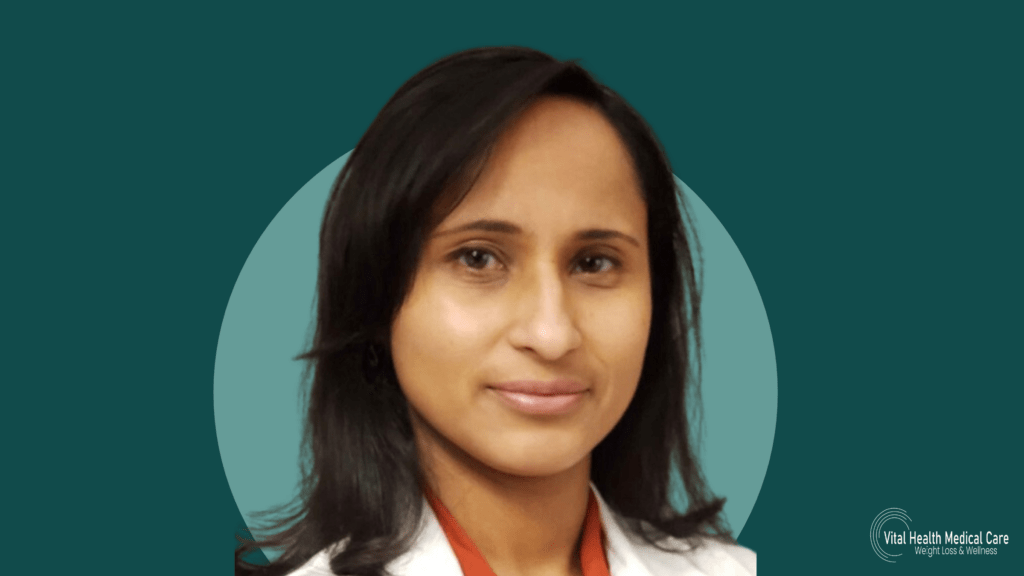
Dr. Sanin Syed, founder and CEO of Vital Health Medical Care, is a board-certified obesity and internal medicine specialist. With over two decades of experience, Dr. Syed is dedicated to helping her patients achieve lasting weight loss and a healthier lifestyle.
- Recognized Expertise: Dr. Syed’s knowledge has been featured on NPR’s Evan Dawson Show and in the Rochester Academy of Medicine.
- Commitment to Patient Health: She focuses on building sustainable health habits and lifestyle changes that support long-term success.
Our clinic, located at 10 Office Parkway, Suite 100, Pittsford, NY, provides a welcoming and professional setting for patients who are ready to make positive changes.
Why Choose Vital Health Medical Care?
Experienced Weight Loss Doctor
Dr. Sanin Syed is one of the leading weight loss doctors in New York, with over 20 years of experience in medicine and obesity management. She holds dual board certifications from the American Board of Obesity Medicine and the American Board of Internal Medicine, ensuring you receive the highest standard of care.
Personalized Care
At Vital Health Medical Care, we believe in a personalized approach to weight loss. Our programs are tailored to meet your unique needs, ensuring you receive the best possible care and support on your weight loss journey.
Comprehensive Support
We provide ongoing support throughout your weight loss journey, including regular monitoring and adjustments to your plan as needed. Our comprehensive approach ensures you have the resources and guidance necessary to achieve your weight loss goals.
Insurance Acceptance
We understand that managing healthcare costs is important. That’s why we accept a wide range of insurance plans to make our weight loss treatments accessible and affordable for everyone.
Nutritional Counseling
Our qualified nutritionists create personalized diet plans that fit your lifestyle and dietary preferences. We provide expert guidance on making healthy food choices that support your weight loss goals.
Physician Consultation
Our experienced physicians, led by Dr. Syed, will work with you to find the best medication and treatment plan for your needs. We utilize FDA-approved medications such as Wegovy and Zepbound to support your weight loss efforts.
Health Coaching
Our health coaches provide ongoing support and motivation, helping you stay on track with your weight loss goals. They offer practical advice and encouragement to help you overcome challenges and achieve lasting success.
Culinary Medicine
Learn how to prepare healthy, delicious meals that support your weight loss journey with guidance from our culinary medicine experts. We offer cooking classes and workshops to help you develop the skills needed to maintain a healthy diet.
Meal Replacement
We offer meal replacement options that are nutritious and convenient, helping you manage your calorie intake effectively. Our meal replacements are designed to support your weight loss goals while ensuring you receive essential nutrients.
Individualized Exercise Plan
Our fitness experts develop personalized exercise plans tailored to your fitness level and goals. We provide guidance on the best types of exercise for weight loss and overall health, ensuring you achieve optimal results.
Comprehensive Weight Loss Treatment in Rochester, New York
Vital Health Medical Care offers evidence-based weight loss treatments designed to help you succeed. We take a holistic approach, integrating medication, diet, exercise, and behavioral changes to ensure long-term success. Contact us today to schedule a consultation and start your journey.